
Advertentie

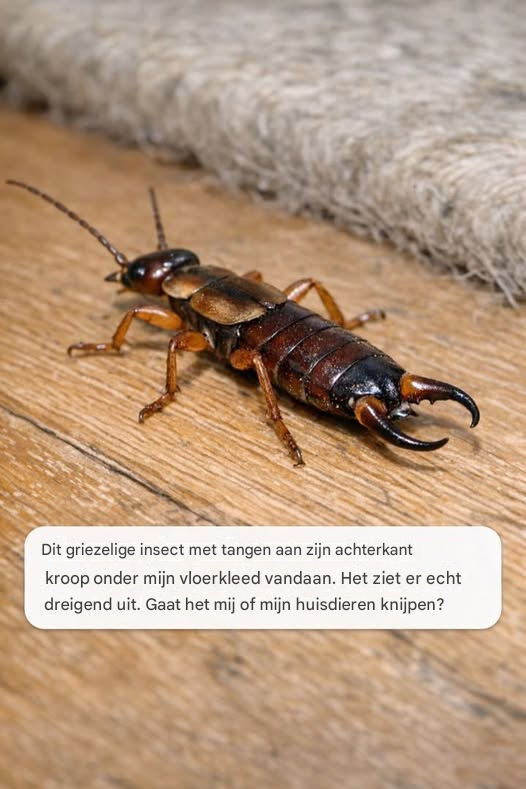
Dit griezelige insect met tangen aan zijn achterkant kroop onder mijn vloerkleed vandaan. Het ziet er echt dreigend uit. Gaat het mij of mijn huisdieren knijpen?

Advertentie

Earwigs do not bite or sting humans or animals. Their primary means of defense is their pincers, which, as mentioned, are not capable of causing significant harm. Earwigs are not known to spread diseases to humans or pets, making them relatively harmless in this regard.
While earwigs can occasionally be a nuisance in gardens due to their feeding habits, indoors they pose no health risks. Their presence is more of an aesthetic concern than a functional one, as they do not damage structures or possessions within the home.
6. What Those Rear Pincers Are Really Used For
The pincers on an earwig’s rear serve multiple purposes. Primarily, they are used for defense against predators. When threatened, an earwig may lift its pincers in a threatening display to ward off attackers. In some species, the pincers are also used in mating rituals. Males with larger or more robust pincers may be more successful in attracting mates.
Additionally, earwigs use their pincers for practical purposes, such as manipulating food and assisting in folding their wings, although most earwigs are not strong fliers. The diversity in function showcases the evolutionary adaptability of these intriguing insects.

Leave a Comment

histat.io analytics