
I looked at my mother. She did not correct Colette. She did not flinch. She just looked at me with eyes that said, Well, she is not wrong.
I looked at my father. He took a sip of his beer.
Something in me shifted.
Not cracked. Not broke. Shifted.
Like a door that had been stuck for years finally swinging open.
I set my fork down gently. I folded my napkin and placed it beside my plate. I smiled, not because I was happy, but because I finally understood something I had been too afraid to admit for thirty-seven years.
I pushed my chair back, stood up, and walked out of that house without saying another word.
The drive home was quiet. I did not turn on the radio. I did not cry. I did not call anyone. I just drove through the warm Louisiana night with the windows down and my hands steady on the wheel.
When I got home, I locked the door, set my phone on the counter, and went to bed.
I did not know it yet, but the next morning was going to change everything.
I woke up at 6:47 in the morning to the sound of my phone vibrating on the nightstand. The screen showed an unknown number with a Baton Rouge area code. I almost let it go to voicemail. I wish I could say I had some kind of instinct about what was coming, but the truth is I was just tired. My body felt heavy from the night before, not from the food, but from the weight of everything I had swallowed and never said.
I picked up on the fourth ring.
“Good morning, ma’am. This is the Baton Rouge Police Department, East Precinct. Am I speaking with Martha Pierre?”
My heart dropped into my stomach. “Yes, this is Martha.”
“Ma’am, we have a situation involving your mother, Francine Pierre. She called in a welfare check on you last night. She reported that you left a family gathering in a state of emotional distress and she was concerned about your safety.”
I sat up in bed. My mouth went dry.
“She did what?”
The officer, a man with a calm but firm voice, repeated himself. My mother had called the police at 11:42 the previous night and told them I had stormed out of a family dinner, that I had been acting erratic, and that she was worried I might be a danger to myself.
I could feel my pulse in my ears.
“Officer, I am perfectly fine. I left a dinner because I chose to leave. I drove home. I went to bed. That is all that happened.”
He asked if I would be willing to confirm my location and allow an officer to do a brief visual check. I agreed, not because I wanted to, but because I knew that refusing would only make things worse.
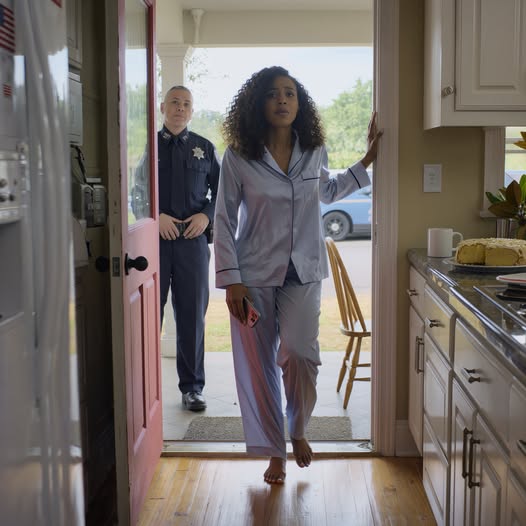
Twenty minutes later, a patrol car pulled into my driveway. A female officer came to my door, looked me over, asked me a few routine questions, confirmed I was safe, and left. She was polite, professional, but the humiliation I felt standing in my doorway in pajamas at seven in the morning, being evaluated like a person in crisis, was something I will carry for a long time.
After the officer left, I sat at my kitchen table and stared at the wall.
My mother had called the police on me not because she was worried, but because I had left. Because I had refused to play my part. Because I had disrupted the script she had written for my life.
And instead of calling me directly, instead of asking if I was okay, she had called the authorities.
That was who Francine Pierre was. If she could not control you, she would find someone who could.
My phone started ringing again at 8:15. This time it was a number I recognized. It was my aunt Lenor, my mother’s younger sister. Lenor was fifty-eight and lived in Lafayette. She was the kind of woman who always showed up with casseroles and opinions.
I picked up because I knew if I did not, she would drive the full hour and a half to my house.
“Martha, what on earth happened last night? Your mama called me crying. She said you walked out on the family and now you will not answer your phone.”
“I did not walk out on the family, Lenor. I left a dinner where I was disrespected.”
“Disrespected how? Your mama said you got upset because Colette is having another baby.”
I closed my eyes. Of course that was the version of events my mother had shared. Of course the story had already been rewritten before the sun came up.
“That is not what happened,” I said. “Colette announced her pregnancy, and before anyone even asked how I felt about anything, Dad told me I would be watching her kids. And Colette said I was not doing anything with my life and that babysitting would give me purpose. Nobody corrected her. Nobody said a word. So I left.”
There was a pause on the other end. Then Lenor sighed.
“Well, Martha, you know how Colette is. She does not mean anything by it. She is just stressed. You are the older sister. You are supposed to be the bigger person.”
I had heard that phrase so many times it had lost all meaning.
Be the bigger person. Absorb the insult. Ignore the favoritism. Smile through the dismissal.
Being the bigger person in my family meant being the smaller one. It meant shrinking so that Colette could expand.
I told Lenor I was fine, that I needed time to think, and I hung up.
By noon, I had seventeen missed calls. Six from my mother, four from Colette, three from Lenor, two from my cousin Theres, who I had not spoken to in over a year, and two more from unknown numbers that I suspected were other relatives my mother had recruited for her campaign.
I did not answer any of them.
Instead, I went to work.
I logged into my remote workstation, put on my headset, and spent the next eight hours coding patient records for a hospital system. I let the monotony of the work steady me. Diagnosis codes. Procedure codes. Insurance modifiers. Each one a small, manageable task that required focus but not emotion.
It was exactly what I needed.
Lees verder door op de knop (Lees verder »») hieronder te klikken!