
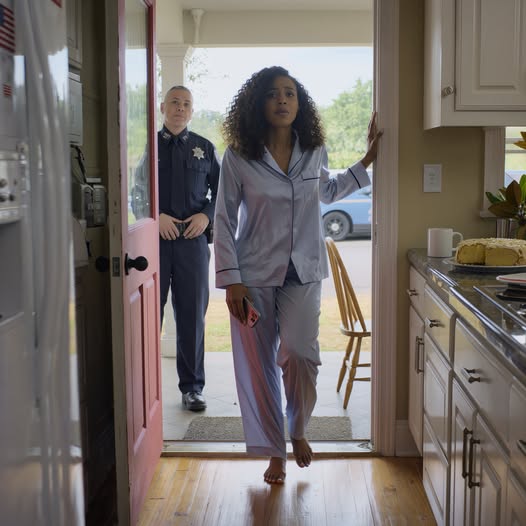
I called Claudet immediately and told her about the visit and the USB drive. She asked me to bring it to her office the next morning.
I drove to New Orleans at dawn on August 13, handed over the drive, and sat in the waiting room while her team reviewed the contents. When she came out an hour later, she was holding a printed stack of text messages, and her expression was one I had not seen before.
It was satisfaction tempered by disgust.
“Martha, these messages are extraordinary evidence. There are multiple exchanges between your mother and Colette discussing the estate, the sale of the house, the distribution of funds, and this is the critical part: explicit acknowledgment that the original will left everything to you.”
They knew.
They both knew.
“There is a message from your mother to Colette dated December 2019, one month after your grandmother passed, that reads—and I am quoting directly—Mama Odessa left everything to Martha. Everything. The house, the savings, the insurance. We cannot let that happen. Martha does not need it. You have two babies. We will take care of this ourselves.”
I felt the air leave my lungs.
I had suspected. I had even assumed. But seeing the words in black and white, knowing that my mother had looked at the wishes of a dead woman and decided they did not matter, that was a different kind of pain.
It was the pain of absolute certainty.
“This changes the case significantly,” Claudet continued. “This is not just negligence or a misunderstanding. This is deliberate, premeditated fraud. The district attorney will want to see this.”
She made copies and placed the originals in a secure file. Then she looked at me across her desk and said, “Are you ready for tomorrow?”
“I have been ready my whole life,” I said.
The hearing was scheduled for ten in the morning at the Orleans Parish Civil District Court on Loyola Avenue. I arrived at 9:15, wearing a navy-blue dress I had bought specifically for the occasion and the pearl earrings my grandmother had given me on my twenty-fifth birthday.
Claudet was already there, organized and composed, her files laid out on the table with surgical precision.
The courtroom was smaller than I expected. Wood-paneled walls. Fluorescent lighting. Rows of benches that were mostly empty. The judge was a woman named Honorable Vivien Arseneaux, a sharp-eyed woman in her sixties who looked like she had seen every lie the state of Louisiana had to offer.
My mother arrived at 9:45 with a lawyer I did not recognize, a man in a gray suit who looked like he had been hired the week before. My father was with her. He sat behind her on the bench, his face set in a hard expression that I had come to understand was not anger, but fear. He was afraid. I could see it in the way he kept rubbing his hands together, the way his eyes darted around the room without landing anywhere.
Colette was not there. Her lawyer had submitted a statement saying she was unable to attend due to her pregnancy, but I noticed the judge’s expression when this was read aloud.
She did not look sympathetic.
She looked skeptical.
The hearing began.
Claudet presented the original notarized will and explained the discrepancy between it and the document filed by my mother. She presented the bank records, the property sale records, and the text messages recovered from the USB drive.
She called me to the stand and asked me to describe my relationship with my grandmother, my understanding of the estate, and the moment I learned the truth.
I spoke clearly and calmly.
I told the court about the visits to Dolphin Street, about the porch and the hymns and the lemon pound cake recipe, about being told by my mother that there was nothing to discuss, about the letter from Claudet’s firm, and the personal note my grandmother had written to me.
When I read the note aloud, the courtroom was silent.
Even the judge paused her pen.
My mother’s lawyer attempted to argue that the original will was outdated and that my grandmother had verbally indicated she wanted the estate divided equally, but he had no evidence to support this. No witnesses. No documents. Just words spoken by a man who clearly did not believe them himself.
The judge listened to both sides, reviewed the documents, and then did something I did not expect.
She recessed the hearing for one hour and asked to review the text messages privately in her chambers.
When she returned, her face was stone.
“The evidence before this court is clear and overwhelming,” she said. “The original notarized will of Odessa Marie Pierre, dated March 15, 2018, is valid and enforceable. The succession filing made in East Baton Rouge Parish using an alternate unsigned document is hereby declared fraudulent and void. This court orders the full restitution of all assets, proceeds, and distributions from the estate of Odessa Marie Pierre to the rightful primary beneficiary, Martha Elaine Pierre.”
She looked directly at my mother.
“Mrs. Pierre, the conduct revealed in these proceedings is deeply troubling. This court will be referring this matter to the district attorney for criminal review.”
My mother stood up so fast her chair scraped against the floor. Her lawyer grabbed her arm and whispered something, but she pulled away.
“This is my family,” she said, her voice cracking. “You cannot put a mother in jail for trying to help her children.”
The judge removed her glasses.
“Mrs. Pierre, you did not help your children. You defrauded one of them. That is not motherhood. That is theft. Sit down.”
My mother sat.
And for the first time in my life, I watched someone tell Francine Pierre to sit down.
And she did.
The aftermath of the hearing unfolded in stages, like a storm that does not arrive all at once but builds layer upon layer until the sky can no longer hold itself together.
The first stage was silence.
Complete, absolute silence from my family.
No calls. No texts. No voicemails. No surprise visits.
For three full weeks after the hearing, I did not hear from a single member of the Pierre family.
And honestly, it was the most peaceful period I had experienced in years.
I used that time to breathe. I went to work. I tended my garden. I sat on my porch in the evenings with a glass of sweet tea and listened to the crickets. I read two novels from Margarite’s recommendation list. I attended my book club, and for the first time, I talked about what had happened in court.
Naen cried. Corine said a word I will not repeat here, but that perfectly captured the situation.
Margarite just held my hand and said, “Your grandmother is proud of you, Martha. She is so proud.”
The second stage was legal.
Claudet worked with the court to begin the restitution process. Because the house on Duffin Street had already been sold, I could not recover the property itself, but the court ordered full financial restitution at the appraised market value of the home, which independent assessors placed at $325,000, not the $210,000 my mother had sold it for.
Combined with the savings account balance, the life insurance proceeds, and interest, the total restitution order came to approximately $475,000.
My mother did not have $475,000.
The money she had taken had been spent, scattered across mortgage payments and car loans and renovations and shopping sprees and all the small selfish indulgences of a woman who believed she was entitled to everything she touched.
Claudet filed liens against my parents’ house and began the process of garnishing whatever assets could be recovered.
At the same time, the district attorney’s office moved forward with criminal charges. In early September, my mother was formally charged with felony fraud, forgery, and theft by conversion. The charges carried a maximum sentence of ten years. She was released on a 25,000 bond, which my father paid using money borrowed from Uncle Bertrand.
The news traveled through the family like wildfire through dry brush.
Lees verder door op de knop (Lees verder »») hieronder te klikken!