
Eleanor nodded once, like she had been waiting for me to say it.
Eleanor filed the initial challenge with the probate court of Fairfield County. The motion was clean. Void the Blake will. Recognize the handwritten original. Investigate the trust transfers.
Two weeks later, the ruling came back.
Motion denied.
Judge Harold Kern wrote, “Insufficient evidence to overturn a properly filed and executed will.”
Eleanor called me from her car. I could hear her breathing, slow and deliberate, the way someone breathes when choosing words very carefully.
“The judge didn’t review the forensic analysis. He didn’t schedule a hearing. He issued a summary denial in forty-eight hours.”
She paused.
“That doesn’t happen.”
I asked the question I already knew the answer to.
“Why?”
“Judge Kern and your father are both members of the Fairfield Country Club. I pulled the sign-in logs. They’ve had dinner together three times in the past month.”
The floor tilted, not because I was surprised, but because I realized this was exactly what my grandmother had warned about.
They did exactly what I feared they would do.
The walls were closing in. The bank would not extend my credit. The renovation was half done, and the bills were stacking up.
Frank agreed to delay payment, but I could hear the strain in his voice when he said, “Take your time.”
He meant it. But time costs money neither of us had.
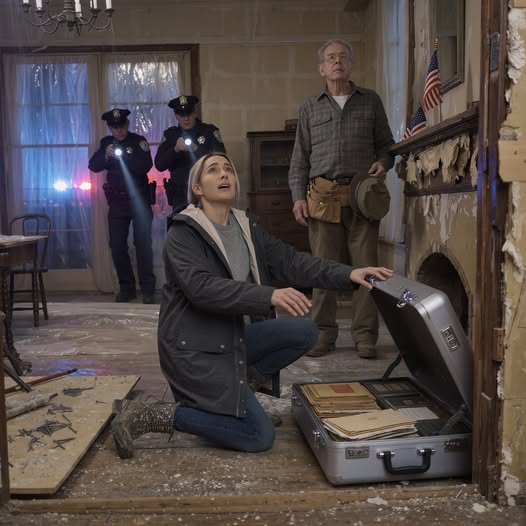
That night, I sat on the floor of the Ridgefield house. Half-gutted walls. Exposed wiring. The smell of sawdust and something older underneath.
I unfolded Grandma’s letter and read the line I kept coming back to.
“Don’t let them make you small, Elise. The truth is heavy, but it will hold you up when nothing else can.”
I sat in that house and wondered if she knew it would be this hard. If she knew the system itself would push back.
The next morning, Eleanor called.
“We’re going federal. I’m making a call.”
“Federal,” I repeated.
The word felt enormous.
“Bank fraud is a federal crime. Elder financial abuse involving state-managed trusts gives us jurisdiction, and if the local bench is compromised, we have grounds to escalate. This isn’t revenge, Elise. This is procedure.”
Her voice was steel.
I closed my eyes. I thought of Grandma’s handwriting, steady and certain, even at the end.
“Make the call,” I said.
Eleanor contacted the FBI field office in New Haven. She presented the case in writing: forged legal documents, questionable trust transfers totaling three hundred forty thousand dollars, a compromised local judge, and evidence collected by the victim herself before her death.
One week later, I received a phone call from a number I did not recognize.
“Miss Harrow, my name is Marcus Whitfield. I’m a retired special agent with the FBI. I’ve been asked to consult on your case due to its complexity.”
His voice was low, unhurried, precise. The kind of voice that makes you listen without knowing why.
We met at a café in Westport. He was already seated when I arrived. A man of seventy-one, silver-haired, wearing a brown tweed jacket over a pressed shirt. Reading glasses on the table. Coffee untouched.
His eyes were sharp, but there was warmth in them, the kind of warmth that takes decades to earn.
He did not start with the case.
He started with her.
“Tell me about your grandmother.”
I was not expecting that.
“What do you want to know?”
“Whatever you want to tell me.”
So I talked. I told him about the lemon cake, the Sunday phone calls, the way she could make a room feel safe just by sitting in it. The porch in Ridgefield, where she would sit with her coffee and say nothing, and somehow say everything.
Marcus listened. He did not take notes. He did not interrupt.
Once, just once, he looked away, and I saw something move behind his expression. Not professional distance. Something closer to grief.
“She was remarkable,” he said quietly.
Lees verder door op de knop (Lees verder »») hieronder te klikken!