
“Where did the $260,000 go?” I asked.
“We are still tracing it,” Claudet said. “But based on what we have so far, a significant portion was used to pay off the mortgage on your parents’ house, and the rest appears to have been spent on various personal expenses, home renovations, travel, and gifts.”
“Gifts,” I repeated. “She stole my inheritance and bought gifts.”
“I know this is painful, Martha, but this is exactly the kind of evidence that strengthens your case. The paper trail is clear. There is no ambiguity here.”
After we hung up, I sat on my back porch and watched the sun go down. The sky turned orange, then pink, then a deep purple that reminded me of the lavender fields my grandmother used to describe from her childhood in Opelousas. She would tell me about running through those fields as a girl, about how the smell would stay in her hair for days, about how her mother would scold her for coming home with purple stains on her dress.
I wondered if my grandmother had known, on some level, that this would happen. If that was why she had gone to a notary in New Orleans instead of handling things through my mother. If she had seen the favoritism and the manipulation and had tried, in her own quiet way, to protect me from it.
I think she did.
I think she knew exactly who her daughter-in-law was.
And I think she loved me enough to plan ahead.
July arrived with a heatwave that turned Baton Rouge into a furnace. The air was so thick you could almost chew it.
I spent the Fourth of July at Margarite’s bakery, helping her set up a dessert table for a neighborhood block party. She had made red velvet cupcakes and blueberry tarts and a white chocolate cheesecake that looked like a work of art. We sat in lawn chairs on the sidewalk and watched fireworks explode over the rooftops while children ran through the street with sparklers.
“How are you holding up?” Margarite asked, her voice gentle against the pop and crackle of the fireworks.
“I am okay,” I said. “I am better than okay, actually. I feel like I have been walking through fog for years and someone finally turned on a light.”
“The light was always there, Martha. You just finally stopped letting other people stand in front of it.”
I smiled. It was the first genuine smile I had felt in weeks.
On July 10, I received a letter in the mail from Claudet. It was a formal notification that the court had granted the petition to reopen the succession and had scheduled an evidentiary hearing for August 14.
Attached was a list of documents that would be presented, including the original notarized will, the fraudulent will filed by my mother, bank records, property sale records, and the sworn affidavit of Claudet Marchand confirming that she had personally witnessed the signing of the original will in 2018.
The letter also included a note from Claudet. It read: Martha, the court has issued summons to Francine Pierre and Colette Pierre Landry to appear at the hearing. They will be served within the next ten days. I want you to be prepared for the fallout. This is the part where things get loud.
She was right.
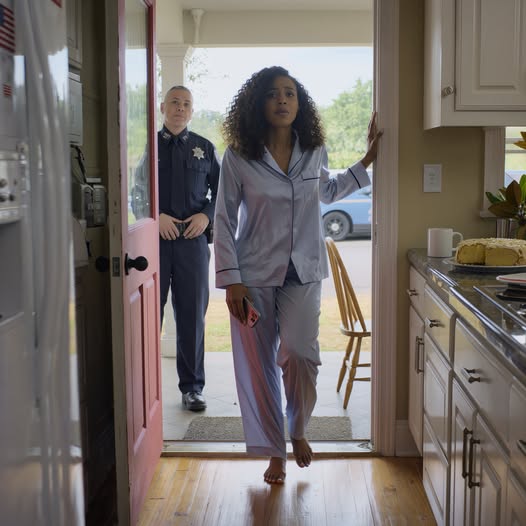
On July 18 at 9:22 in the morning, my phone rang.
It was my mother.
I picked up.
“Martha.”
Her voice was different. Not angry. Not lecturing.
Trembling.
“Martha, there are people at my door. They say I have to go to court. They say this is about Mama Odessa’s estate. What did you do?”
“I did not do anything, Mom. The truth did.”
“What truth? What are you talking about? I handled everything fairly. I split everything between you and Colette.”
“No, you did not. You filed a fake will. You sold the house. You took the insurance money. And you gave me nothing.”
The line went quiet. Then I heard breathing. Fast, shallow breathing.
“Martha, you do not understand. I did what I had to do. Colette needed the money. She had the children. She had bills. You were fine on your own. You have always been fine.”
“So because I took care of myself, I deserve to be robbed?”
“I did not rob you.”
“The court will decide that.”
She started crying. Loud, theatrical sobs that I had heard a hundred times before at family gatherings when she wanted sympathy.
But this time, they did not move me. They did not even touch me, because I had finally learned the difference between a woman in pain and a woman performing pain.
“I am your mother, Martha. You cannot do this to your own mother.”
“You were also the executor of your mother-in-law’s estate, and you stole from your own daughter. So let us not talk about what family should and should not do.”
I hung up the phone and set it face down on the counter.
Then I went outside, watered my tomatoes, and waited for August.
August arrived like a reckoning.
The heat had not broken, and the city of Baton Rouge moved through its days with a sluggish, sweat-drenched patience that matched my own. I had been waiting for months. I could wait a little longer.
In the days leading up to the hearing, a family campaign intensified. My aunt Lenor called twice. My cousin Theres sent a long text message explaining that my mother was not well and that pursuing legal action would destroy the family. My uncle Bertrand, my father’s brother, who lived in Shreveport and whom I had not spoken to in three years, called to tell me I was making a grave mistake and that my grandmother would be spinning in her grave if she knew what I was doing.
I told him that my grandmother was the reason I was doing it.
He hung up.
Colette, meanwhile, had gone silent. After weeks of hostile texts, she stopped communicating entirely. I did not know if this was because she had been advised by a lawyer to stop or because she was scared or because she simply had nothing left to say.
Whatever the reason, the silence from her was louder than anything she had ever spoken.
On August 12, two days before the hearing, I received an unexpected visitor.
I was in my kitchen making coffee when I heard a knock at my front door. I opened it to find Damen Landry standing on my porch. He looked tired, his eyes were red, and his hands were pushed deep into the pockets of his jeans. He was wearing a faded trucking company polo and work boots. He smelled like diesel and long roads.
“Martha,” he said. “I know I should have called first, but I did not want Colette to know I was coming.”
I stepped aside and let him in.
We sat at my kitchen table, and I poured him a cup of coffee. He wrapped both hands around the mug and stared into it for a long time before speaking.
“I did not know about the money,” he said. “Not all of it. Colette told me her mama gave her some money from your grandmother’s estate. Said it was twenty thousand. I did not ask questions. I should have.”
“How much did she actually get?”
“I found the bank statements last week. She got ninety-five thousand. She used most of it on clothes, vacations, and a down payment on a car she told me her parents bought her.”
I nodded slowly. I was not surprised. Disappointed, but not surprised.
“There is something else,” Damen said. He set the mug down and looked at me directly. “Colette and I are separating. I filed the papers two weeks ago. It is not just about the money. It is about the lying, the spending, the way she treats everyone around her like they exist to serve her. I cannot do it anymore. Not with a third baby on the way. Not when I know who she really is.”
“I am sorry, Damian.”
“Do not be. I should have seen it sooner. But I was gone so much, I told myself things were fine, that she was handling things, that her family was helping.”
He laughed, but there was no humor in it.
“Her family was helping, all right. Helping themselves.”
He stayed for about an hour. Before he left, he handed me a USB drive.
“There are bank statements on there. Text messages between Colette and your mama about the money. I found them on an old tablet Colette left in the closet. I do not know if they help your case, but I figured you should have them.”
I took the drive and thanked him. He shook my hand, walked to his truck, and drove away.
I never saw him at my house again after that day, but what he gave me was invaluable.
Lees verder door op de knop (Lees verder »») hieronder te klikken!